Legenda Bookstore
HOME
ACCOUNT
GIFT CARDS
WISHLIST
SHOP
Sale!

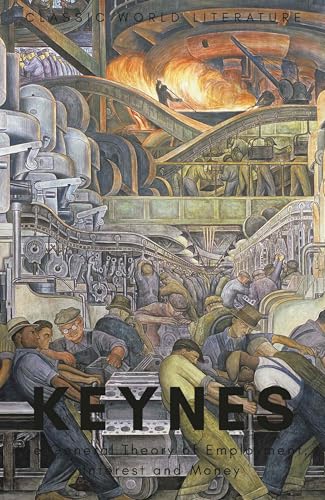
Wordsworth Classics of World Literature: The General Theory of Employment,Interest and Money: With The Economic Consequences of The Peace

By John Maynard Keynes, Mark G. Spencer, Tom Griffith

Original price was: 4.00 JOD.Current price is: 3.40 JOD.

[cool_tag_cloud taxonomy="product_tag" smallest="16" largest="16" on_single_display="local"]
Add to Wishlist
Add to Wishlist
ISBN: 9781840227475
Publisher: Wordsworth Editions Ltd
Binding: Paperback
Number of Pages: 576
Publication Date: 05-Mar-17
Share on

John Maynard Keynes is perhaps the foremost economic thinker of the 20th century. He ranks with Adam Smith and Karl Marx; and his impact on how economics was practiced, from the Great Depression to the 1970s, was unmatched. John Maynard Keynes (1883-1946) is perhaps the foremost economic thinker of the twentieth century. On economic theory, he ranks with Adam Smith and Karl Marx; and his impact on how economics was practiced, from the Great Depression to the 1970s, was unmatched. The General Theory of Employment, Interest and Money was first published in 1936. But its ideas had been forming for decades as a student at Cambridge, Keynes had written to a friend of his love for Free Trade and free thought. Keyness limpid style, concise prose, and vivid descriptions have helped to keep his ideas alive – as have the novelty and clarity, at times even the ambiguity, of his macroeconomic vision. He was troubled, above all, by high unemployment rates and large disparities in wealth and income. Only by curbing both, he thought, could individualism, `the most powerful instrument to better the future, be safeguarded. The twenty-first century may yet prove him right. In The Economic Consequences of the Peace (1919), Keynes elegantly and acutely exposes the folly of imposing austerity on a defeated and struggling nation.
Tab Content

This is a basic text element.

About Author

Description

John Maynard Keynes is perhaps the foremost economic thinker of the 20th century. He ranks with Adam Smith and Karl Marx; and his impact on how economics was practiced, from the Great Depression to the 1970s, was unmatched. John Maynard Keynes (1883-1946) is perhaps the foremost economic thinker of the twentieth century. On economic theory, he ranks with Adam Smith and Karl Marx; and his impact on how economics was practiced, from the Great Depression to the 1970s, was unmatched. The General Theory of Employment, Interest and Money was first published in 1936. But its ideas had been forming for decades as a student at Cambridge, Keynes had written to a friend of his love for Free Trade and free thought. Keyness limpid style, concise prose, and vivid descriptions have helped to keep his ideas alive - as have the novelty and clarity, at times even the ambiguity, of his macroeconomic vision. He was troubled, above all, by high unemployment rates and large disparities in wealth and income. Only by curbing both, he thought, could individualism, `the most powerful instrument to better the future, be safeguarded. The twenty-first century may yet prove him right. In The Economic Consequences of the Peace (1919), Keynes elegantly and acutely exposes the folly of imposing austerity on a defeated and struggling nation.

Tab Content

This is a basic text element.
Add a review
Wordsworth Classics of World Literature: The General Theory of Employment,Interest and Money: With The Economic Consequences of The Peace Wordsworth Classics of World Literature: The General Theory of Employment,Interest and Money: With The Economic Consequences of The Peace
Rating*
0/5
* Rating is required
Your review
* Review is required
Name
* Name is required
Add photos or video to your review
0.0
Based on 0 reviews
5 star
0%
4 star
0%
3 star
0%
2 star
0%
1 star
0%
0 of 0 reviews

Sorry, no reviews match your current selections

You Might Also Like

©2026 Legenda Bookstore. All Rights Reserved.
Powered by UAE Grid
Accepted payment methods - COD and Visa
0