Legenda Bookstore
HOME
ACCOUNT
GIFT CARDS
WISHLIST
SHOP

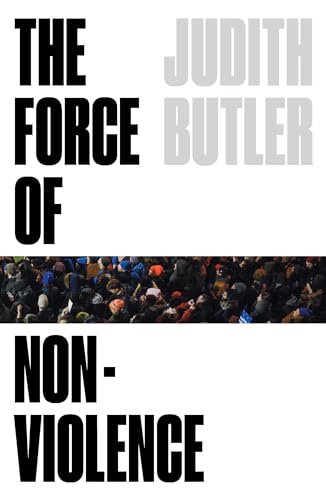
The Force of Nonviolence : An Ethico-Political Bind

By Judith Butler

11.00 JOD

[cool_tag_cloud taxonomy="product_tag" smallest="16" largest="16" on_single_display="local"]
Add to Wishlist
Add to Wishlist
ISBN: 9781788732772
Publisher: Verso Books
Binding: Paperback
Number of Pages: 224
Publication Date: 09-Feb-21
Share on

Judith Butler’s new book shows how an ethic of nonviolence must be connected to a broader political struggle for social equality. Further, it argues that nonviolence is often misunderstood as a passive practice that emanates from a calm region of the soul, or as an individualist ethical relation to existing forms of power. But, in fact, nonviolence is an ethical position found in the midst of the political field. An aggressive form of nonviolence accepts that hostility is part of our psychic constitution, but values ambivalence as a way of checking the conversion of aggression into violence. One contemporary challenge to a politics of nonviolence points out that there is a difference of opinion on what counts as violence and nonviolence. The distinction between them can be mobilised in the service of ratifying the state’s monopoly on violence.

Considering nonviolence as an ethical problem within a political philosophy requires a critique of individualism as well as an understanding of the psychosocial dimensions of violence. Butler draws upon Foucault, Fanon, Freud, and Benjamin to consider how the interdiction against violence fails to include lives regarded as ungrievable. By considering how ‘racial phantasms’ inform justifications of state and administrative violence, Butler tracks how violence is often attributed to those who are most severely exposed to its lethal effects. The struggle for nonviolence is found in movements for social transformation that reframe the grievability of lives in light of social equality and whose ethical claims follow from an insight into the interdependency of life as the basis of social and political equality.

Judith Butler is Maxine Elliot Professor of Comparative Literature and Critical Theory at the University of California, Berkeley. She is the author of numerous books including Precarious Life (Verso, 2004), Frames of War (Verso, 2009), and Towards a Performative Theory of Assembly (Harvard University Press, 2015).

Tab Content

This is a basic text element.

About Author

Judith Butler is Maxine Elliot Professor of Comparative Literature and Critical Theory at the University of California, Berkeley. She is the author of numerous books including Precarious Life (Verso, 2004), Frames of War (Verso, 2009), and Towards a Performative Theory of Assembly (Harvard University Press, 2015).

Description

Judith Butler's new book shows how an ethic of nonviolence must be connected to a broader political struggle for social equality. Further, it argues that nonviolence is often misunderstood as a passive practice that emanates from a calm region of the soul, or as an individualist ethical relation to existing forms of power. But, in fact, nonviolence is an ethical position found in the midst of the political field. An aggressive form of nonviolence accepts that hostility is part of our psychic constitution, but values ambivalence as a way of checking the conversion of aggression into violence. One contemporary challenge to a politics of nonviolence points out that there is a difference of opinion on what counts as violence and nonviolence. The distinction between them can be mobilised in the service of ratifying the state's monopoly on violence. Considering nonviolence as an ethical problem within a political philosophy requires a critique of individualism as well as an understanding of the psychosocial dimensions of violence. Butler draws upon Foucault, Fanon, Freud, and Benjamin to consider how the interdiction against violence fails to include lives regarded as ungrievable. By considering how 'racial phantasms' inform justifications of state and administrative violence, Butler tracks how violence is often attributed to those who are most severely exposed to its lethal effects. The struggle for nonviolence is found in movements for social transformation that reframe the grievability of lives in light of social equality and whose ethical claims follow from an insight into the interdependency of life as the basis of social and political equality.

Tab Content

This is a basic text element.
Add a review
The Force of Nonviolence : An Ethico-Political Bind The Force of Nonviolence : An Ethico-Political Bind
Rating*
0/5
* Rating is required
Your review
* Review is required
Name
* Name is required
Add photos or video to your review
0.0
Based on 0 reviews
5 star
0%
4 star
0%
3 star
0%
2 star
0%
1 star
0%
0 of 0 reviews

Sorry, no reviews match your current selections

You Might Also Like

©2026 Legenda Bookstore. All Rights Reserved.
Powered by UAE Grid
Accepted payment methods - COD and Visa
0