Legenda Bookstore
HOME
ACCOUNT
GIFT CARDS
WISHLIST
SHOP
Sale!

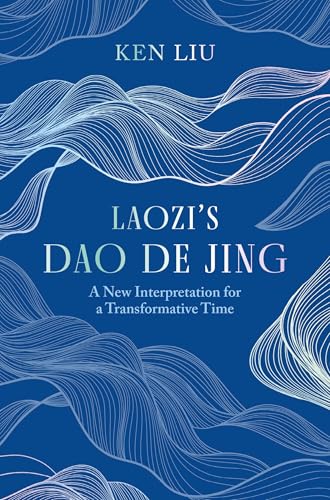
Laozi’s Dao De Jing

By Ken Liu

Original price was: 14.00 JOD.Current price is: 12.00 JOD.

[cool_tag_cloud taxonomy="product_tag" smallest="16" largest="16" on_single_display="local"]
Add to Wishlist
Add to Wishlist
ISBN: 9781035917624
Publisher: Bloomsbury Publishing
Binding: Hardback
Number of Pages: 176
Publication Date: 29-Apr-25
Share on

Laozi’s Dao De Jing was written around 400 BC by a compassionate soul in a world torn by hatred and ambition, dominated by those that yearned for apocalyptic confrontations and prized ideology over experience. By speaking out against the cleverness of elites and the arrogance of the learned, Laozi upheld the wisdom of the concrete, the humble, the quotidian, the everyday individual dismissed by the great powers of the world. Earthy, playful, and defiant, Laozi’s words gave solace to souls back then, and offer comfort today. Now, this beautifully designed new edition serves as both an accessible new translation of an ancient Chinese classic and a fascinating account of renowned novelist Ken Liu’s transformative experience while wrestling with the classic text.

Throughout this translation, Liu takes us through his own struggles to capture the meaning in Laozi’s text in a series of thoughtful and provocative interstitial entries. Unlike traditional notes that purport to be objective, these entries are explicitly personal and unapologetically subjective. Gradually, as Liu learns that true wisdom cannot be pinned down in words, the notes grow sparser until they fade away entirely. His journey suggests the only way out of struggle is to engage with texts that have survived the millennia, wrestling with ideas that gesture at something eternal, in hopes that we might eventually reach that moment of transcendent joy.

Liu’s translation, by eschewing cleverness, paradoxically reveals the slipperiness of Laozi’s original. The Dao De Jing has been translated countless times and will be translated countless times in the future. In that constant change and flow, we finally find our home in Dao, the eternal principle that allows us, finite beings in time and space, to reckon and reconcile with the infinite.
Ken Liu (http://kenliu.name) is an American author of speculative fiction. A winner of the Nebula, Hugo, and World Fantasy awards for his fiction, he has also won top genre honors abroad in Japan, Spain, and France. Liu’s most characteristic work is the four-volume epic fantasy series, The Dandelion Dynasty, in which engineers, not wizards, are the heroes of a silkpunk world on the verge of modernity. His debut collection of short fiction, The Paper Menagerie and Other Stories, has been published in more than a dozen languages. A second collection, The Hidden Girl and Other Stories, followed. He also penned the Star Wars novel, The Legends of Luke Skywalker. He’s often involved in media adaptations of his work. Recent projects include “The Message,” under development by 21 Laps and FilmNation Entertainment; “Good Hunting,” adapted as an episode in season one of Netflix’s breakout adult animated series Love, Death + Robots; and AMC’s Pantheon, with Craig Silverstein as executive producer, adapted from an interconnected series of Liu’s short stories. Prior to becoming a full-time writer, Liu worked as a software engineer, corporate lawyer, and litigation consultant. He frequently speaks at conferences and universities on a variety of topics, including futurism, machine-augmented creativity, history of technology, bookmaking, and the mathematics of origami. Liu lives with his family near Boston, Massachusetts.

Tab Content

This is a basic text element.

About Author

Ken Liu (http://kenliu.name) is an American author of speculative fiction. A winner of the Nebula, Hugo, and World Fantasy awards for his fiction, he has also won top genre honors abroad in Japan, Spain, and France. Liu’s most characteristic work is the four-volume epic fantasy series, The Dandelion Dynasty, in which engineers, not wizards, are the heroes of a silkpunk world on the verge of modernity. His debut collection of short fiction, The Paper Menagerie and Other Stories, has been published in more than a dozen languages. A second collection, The Hidden Girl and Other Stories, followed. He also penned the Star Wars novel, The Legends of Luke Skywalker. He’s often involved in media adaptations of his work. Recent projects include “The Message,” under development by 21 Laps and FilmNation Entertainment; “Good Hunting,” adapted as an episode in season one of Netflix’s breakout adult animated series Love, Death + Robots; and AMC’s Pantheon, with Craig Silverstein as executive producer, adapted from an interconnected series of Liu’s short stories. Prior to becoming a full-time writer, Liu worked as a software engineer, corporate lawyer, and litigation consultant. He frequently speaks at conferences and universities on a variety of topics, including futurism, machine-augmented creativity, history of technology, bookmaking, and the mathematics of origami. Liu lives with his family near Boston, Massachusetts.

Description

Laozi's Dao De Jing was written around 400 BC by a compassionate soul in a world torn by hatred and ambition, dominated by those that yearned for apocalyptic confrontations and prized ideology over experience. By speaking out against the cleverness of elites and the arrogance of the learned, Laozi upheld the wisdom of the concrete, the humble, the quotidian, the everyday individual dismissed by the great powers of the world. Earthy, playful, and defiant, Laozi's words gave solace to souls back then, and offer comfort today. Now, this beautifully designed new edition serves as both an accessible new translation of an ancient Chinese classic and a fascinating account of renowned novelist Ken Liu's transformative experience while wrestling with the classic text. Throughout this translation, Liu takes us through his own struggles to capture the meaning in Laozi's text in a series of thoughtful and provocative interstitial entries. Unlike traditional notes that purport to be objective, these entries are explicitly personal and unapologetically subjective. Gradually, as Liu learns that true wisdom cannot be pinned down in words, the notes grow sparser until they fade away entirely. His journey suggests the only way out of struggle is to engage with texts that have survived the millennia, wrestling with ideas that gesture at something eternal, in hopes that we might eventually reach that moment of transcendent joy. Liu's translation, by eschewing cleverness, paradoxically reveals the slipperiness of Laozi's original. The Dao De Jing has been translated countless times and will be translated countless times in the future. In that constant change and flow, we finally find our home in Dao, the eternal principle that allows us, finite beings in time and space, to reckon and reconcile with the infinite.

Tab Content

This is a basic text element.
Add a review
Laozi's Dao De Jing Laozi's Dao De Jing
Rating*
0/5
* Rating is required
Your review
* Review is required
Name
* Name is required
Add photos or video to your review
0.0
Based on 0 reviews
5 star
0%
4 star
0%
3 star
0%
2 star
0%
1 star
0%
0 of 0 reviews

Sorry, no reviews match your current selections

You Might Also Like

©2026 Legenda Bookstore. All Rights Reserved.
Powered by UAE Grid
Accepted payment methods - COD and Visa
0