Legenda Bookstore
HOME
ACCOUNT
GIFT CARDS
WISHLIST
SHOP
Sale!

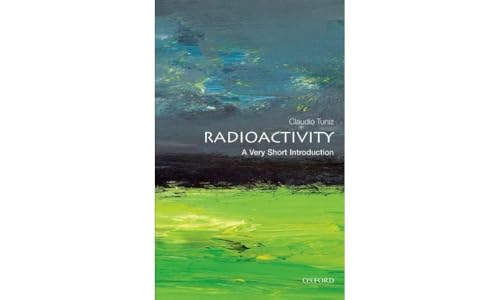
Very Short Introductions: Radioactivity

By Claudio Tuniz

Original price was: 8.81 JOD.Current price is: 6.00 JOD.

[cool_tag_cloud taxonomy="product_tag" smallest="16" largest="16" on_single_display="local"]
Add to Wishlist
Add to Wishlist
ISBN: 9780199692422
Publisher: Oxford University Press
Binding: Paperback
Number of Pages: 176
Publication Date: 01-Dec-12
Share on

Radioactivity – the breakdown of unstable atomic nuclei, releasing radiation – is a fundamental process in nature, and used to provide important applications in science, medicine, and energy production. But it remains misunderstood and feared. In this Very Short Introduction, Claudio Tuniz explains the nature and mechanisms of radioactivity. You cannot hide from radioactivity. Even the book you are holding is slightly radioactive, but there are more serious risks. Radioactivity – the breakdown of unstable atomic nuclei, releasing radiation – is a fundamental process in nature. It is a process that has been harnessed to provide wide and important applications in science, medicine, industry, and energy production. But it remains much misunderstood – and feared, perhaps because nuclear radiation cannot be detected by human senses, and can undoubtedly do great harm if appropriate precautions are not taken. In recent times there have been increasing concerns about nuclear terrorism. The traces of radioactive atoms in rocks have allowed us to understand the nature and history of the Earth, in particular to date events in that history. Radioactive dating has been used for a variety of purposes, from determining the age of the first hominids to the dating of the Turin Shroud. The discovery of radioactivity has improved our survival kit, but also gave us the chance to reach a new level of awareness on the history of our species and its environmental impacts. In this Very Short Introduction, Claudio Tuniz explains the nature of radioactivity and discuss its role in nature. Describing radioactivity in the stars and in the Earth, he also looks at its wide range of applications in biomedicine and in science, as well as the mechanisms of nuclear fission and fusion, and the harnessing of nuclear power. ABOUT THE SERIES: The Very Short Introductions series from Oxford University Press contains hundreds of titles in almost every subject area. These pocket-sized books are the perfect way to get ahead in a new subject quickly. Our expert authors combine facts, analysis, perspective, new ideas, and enthusiasm to make interesting and challenging topics highly readable.
Claudio Tuniz was Assistant Director of the Abdus Salam International Centre for Theoretical Physics in Trieste . Previously he was Nuclear Counsellor at the Australian Embassy to the IAEA in Vienna and Director of the Physics Division at the Australian Nuclear Science and Technology Organization in Sydney. He is co-author of the book The Bone Readers (2009).

Tab Content

This is a basic text element.

About Author

Claudio Tuniz was Assistant Director of the Abdus Salam International Centre for Theoretical Physics in Trieste . Previously he was Nuclear Counsellor at the Australian Embassy to the IAEA in Vienna and Director of the Physics Division at the Australian Nuclear Science and Technology Organization in Sydney. He is co-author of the book The Bone Readers (2009).

Description

Radioactivity - the breakdown of unstable atomic nuclei, releasing radiation - is a fundamental process in nature, and used to provide important applications in science, medicine, and energy production. But it remains misunderstood and feared. In this Very Short Introduction, Claudio Tuniz explains the nature and mechanisms of radioactivity. You cannot hide from radioactivity. Even the book you are holding is slightly radioactive, but there are more serious risks. Radioactivity - the breakdown of unstable atomic nuclei, releasing radiation - is a fundamental process in nature. It is a process that has been harnessed to provide wide and important applications in science, medicine, industry, and energy production. But it remains much misunderstood - and feared, perhaps because nuclear radiation cannot be detected by human senses, and can undoubtedly do great harm if appropriate precautions are not taken. In recent times there have been increasing concerns about nuclear terrorism. The traces of radioactive atoms in rocks have allowed us to understand the nature and history of the Earth, in particular to date events in that history. Radioactive dating has been used for a variety of purposes, from determining the age of the first hominids to the dating of the Turin Shroud. The discovery of radioactivity has improved our survival kit, but also gave us the chance to reach a new level of awareness on the history of our species and its environmental impacts. In this Very Short Introduction, Claudio Tuniz explains the nature of radioactivity and discuss its role in nature. Describing radioactivity in the stars and in the Earth, he also looks at its wide range of applications in biomedicine and in science, as well as the mechanisms of nuclear fission and fusion, and the harnessing of nuclear power. ABOUT THE SERIES: The Very Short Introductions series from Oxford University Press contains hundreds of titles in almost every subject area. These pocket-sized books are the perfect way to get ahead in a new subject quickly. Our expert authors combine facts, analysis, perspective, new ideas, and enthusiasm to make interesting and challenging topics highly readable.

Tab Content

This is a basic text element.
Add a review
Very Short Introductions: Radioactivity Very Short Introductions: Radioactivity
Rating*
0/5
* Rating is required
Your review
* Review is required
Name
* Name is required
Add photos or video to your review
0.0
Based on 0 reviews
5 star
0%
4 star
0%
3 star
0%
2 star
0%
1 star
0%
0 of 0 reviews

Sorry, no reviews match your current selections

You Might Also Like

©2026 Legenda Bookstore. All Rights Reserved.
Powered by UAE Grid
Accepted payment methods - COD and Visa
0