Legenda Bookstore
HOME
ACCOUNT
GIFT CARDS
WISHLIST
SHOP
Sale!

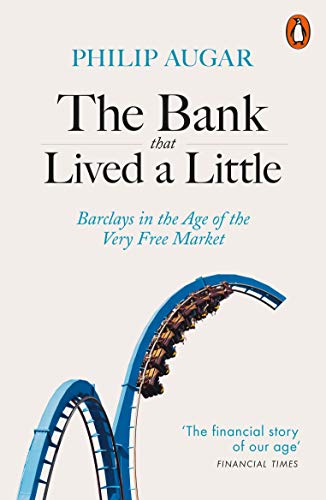
The Bank That Lived a Little: Barclays in the Age of the Very Free Market

By Philip Augar

Original price was: 13.00 JOD.Current price is: 11.00 JOD.

[cool_tag_cloud taxonomy="product_tag" smallest="16" largest="16" on_single_display="local"]
Add to Wishlist
Add to Wishlist
ISBN: 9780141987538
Publisher: Penguin Books Ltd
Binding: Paperback
Number of Pages: 448
Publication Date: 04-Jul-19
Share on

A brilliantly readable account, based on exceptional access, of the transformation of the old Quaker bank into a hard-charging capitalist adventurer … both a thriller and a reminder that business is fascinating because all human life is there John Plender, Financial Times Based on unparalleled access to those involved, and told with compelling pace and drama, The Bank that Lived a Little describes three decades of boardroom intrigue at one of Britains biggest financial institutions. In a tale of feuds, grandiose dreams and a struggle for supremacy between rival strategies and their adherents, Philip Augar gives a riveting account of Barclays journey from an old Quaker bank to a full-throttle capitalist machine. The disagreement between those ambitious for Barclays to join the top table of global banks, and those preferring a smaller domestic role more in keeping with the banks traditions, cost three chief executives their jobs and continues to divide opinion within Barclays, the City and beyond. This is an extraordinary corporate thriller, which among much else describes how Barclays came to buy Lehman Brothers for a bargain price in 2008, why it was so keen to avoid taking government funding during the financial crisis, and the price shareholders have paid for a decade of barely controlled ambition. But Augar also shows how Barclays experiences are a paradigm for Britains social and economic life over thirty years, which saw the City move from the edge of the economy to its very centre. These decades created unprecedented prosperity for a tiny number, and made the reputations of governments and individuals but then left many of them in tatters. The leveraged society, the winner-takes-all mentality and our present era of austerity can all be traced to the influence of banks such as Barclays. Augars book tells this rollercoaster story from the perspective of many of its participants – and also of those affected by the grip they came to have on Britain.
Philip Augar, a former banker with a doctorate in history, is the author of several previous books including the celebrated The Death of Gentlemanly Capitalism (Allen Lane, 2000). He has held numerous public and private sector directorships, and is currently chair of the UK government's review of higher education. He contributes regularly to the Financial Times and the BBC.

Tab Content

This is a basic text element.

About Author

Philip Augar, a former banker with a doctorate in history, is the author of several previous books including the celebrated The Death of Gentlemanly Capitalism (Allen Lane, 2000). He has held numerous public and private sector directorships, and is currently chair of the UK government's review of higher education. He contributes regularly to the Financial Times and the BBC.

Description

A brilliantly readable account, based on exceptional access, of the transformation of the old Quaker bank into a hard-charging capitalist adventurer ... both a thriller and a reminder that business is fascinating because all human life is there John Plender, Financial Times Based on unparalleled access to those involved, and told with compelling pace and drama, The Bank that Lived a Little describes three decades of boardroom intrigue at one of Britains biggest financial institutions. In a tale of feuds, grandiose dreams and a struggle for supremacy between rival strategies and their adherents, Philip Augar gives a riveting account of Barclays journey from an old Quaker bank to a full-throttle capitalist machine. The disagreement between those ambitious for Barclays to join the top table of global banks, and those preferring a smaller domestic role more in keeping with the banks traditions, cost three chief executives their jobs and continues to divide opinion within Barclays, the City and beyond. This is an extraordinary corporate thriller, which among much else describes how Barclays came to buy Lehman Brothers for a bargain price in 2008, why it was so keen to avoid taking government funding during the financial crisis, and the price shareholders have paid for a decade of barely controlled ambition. But Augar also shows how Barclays experiences are a paradigm for Britains social and economic life over thirty years, which saw the City move from the edge of the economy to its very centre. These decades created unprecedented prosperity for a tiny number, and made the reputations of governments and individuals but then left many of them in tatters. The leveraged society, the winner-takes-all mentality and our present era of austerity can all be traced to the influence of banks such as Barclays. Augars book tells this rollercoaster story from the perspective of many of its participants - and also of those affected by the grip they came to have on Britain.

Tab Content

This is a basic text element.
Add a review
The Bank That Lived a Little: Barclays in the Age of the Very Free Market The Bank That Lived a Little: Barclays in the Age of the Very Free Market
Rating*
0/5
* Rating is required
Your review
* Review is required
Name
* Name is required
Add photos or video to your review
0.0
Based on 0 reviews
5 star
0%
4 star
0%
3 star
0%
2 star
0%
1 star
0%
0 of 0 reviews

Sorry, no reviews match your current selections

You Might Also Like

©2026 Legenda Bookstore. All Rights Reserved.
Powered by UAE Grid
Accepted payment methods - COD and Visa
0